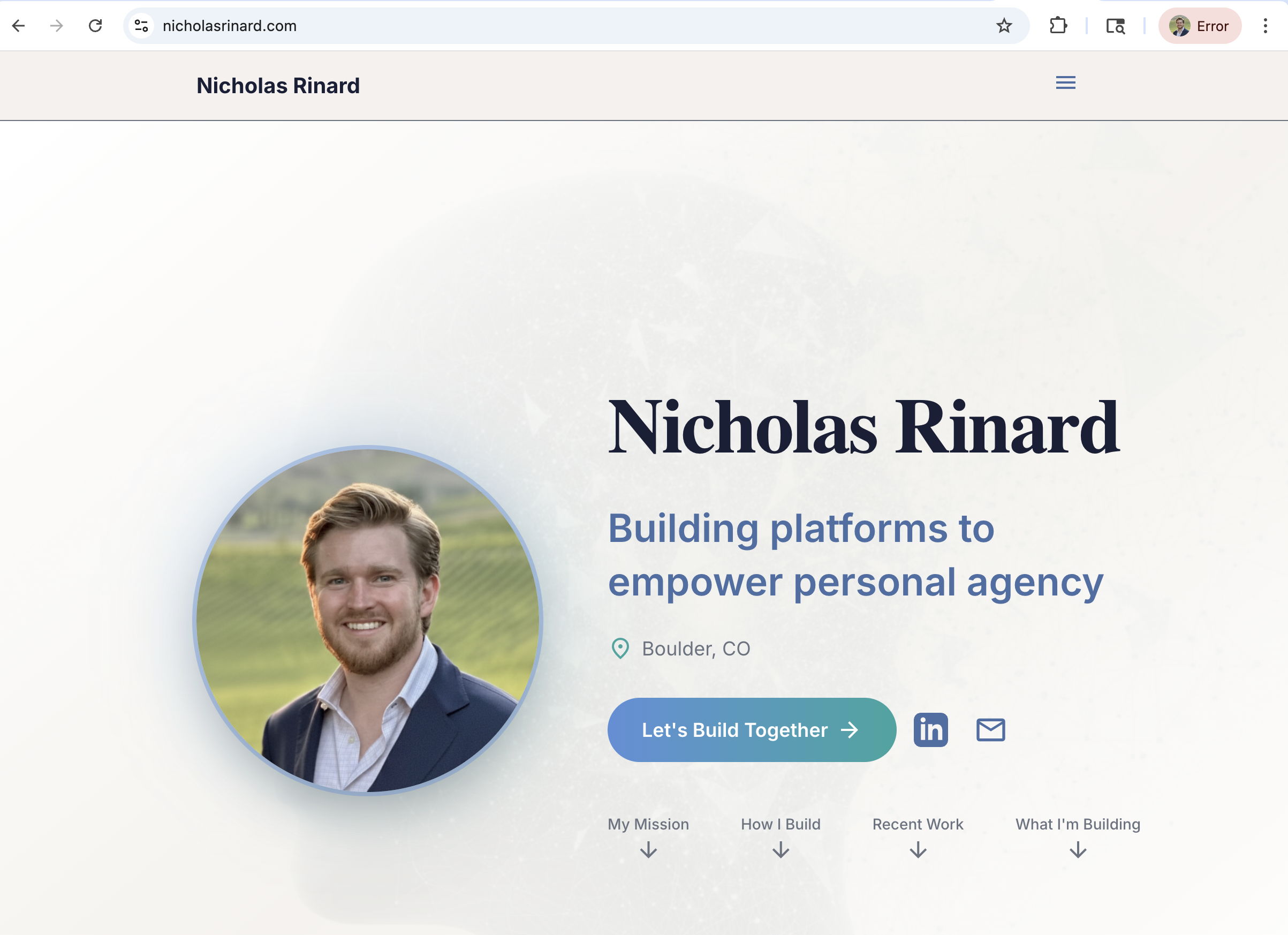
From Podcast Spark to Gemini-Powered Personal Playground
The Spark: When Inspiration Meets Opportunity
For years, my professional philosophy, my vision for personal agency, and the essence of projects like the 'Prometheus Group' have existed in scattered documents – LinkedIn profiles, resumes, brand strategy guides. I had the "what" – a clear articulation of my ideas – but I was missing the "where" to effectively share them.
Then, during "The Product Growth Podcast" by Aakash Gupta featuring Jaclyn Konzelmann discussing Google Labs projects like Mixboard and Opal, a simple comment resonated deeply: the profound value of a personal website for communicating one's work. This wasn't just an inspiration for a website; it was a call to action to leverage the very AI tools she mentioned to build something truly novel. This was the genesis of my "AI-First Web Build."
Phase 1: The Strategic Triangulation of Different Models
My initial goal was to define the site's core purpose: to disseminate ideas, gauge audience interest, solicit feedback, and connect with like-minded individuals. This immediately highlighted the need for two fundamental functions: robust analytics and a clear communication channel.
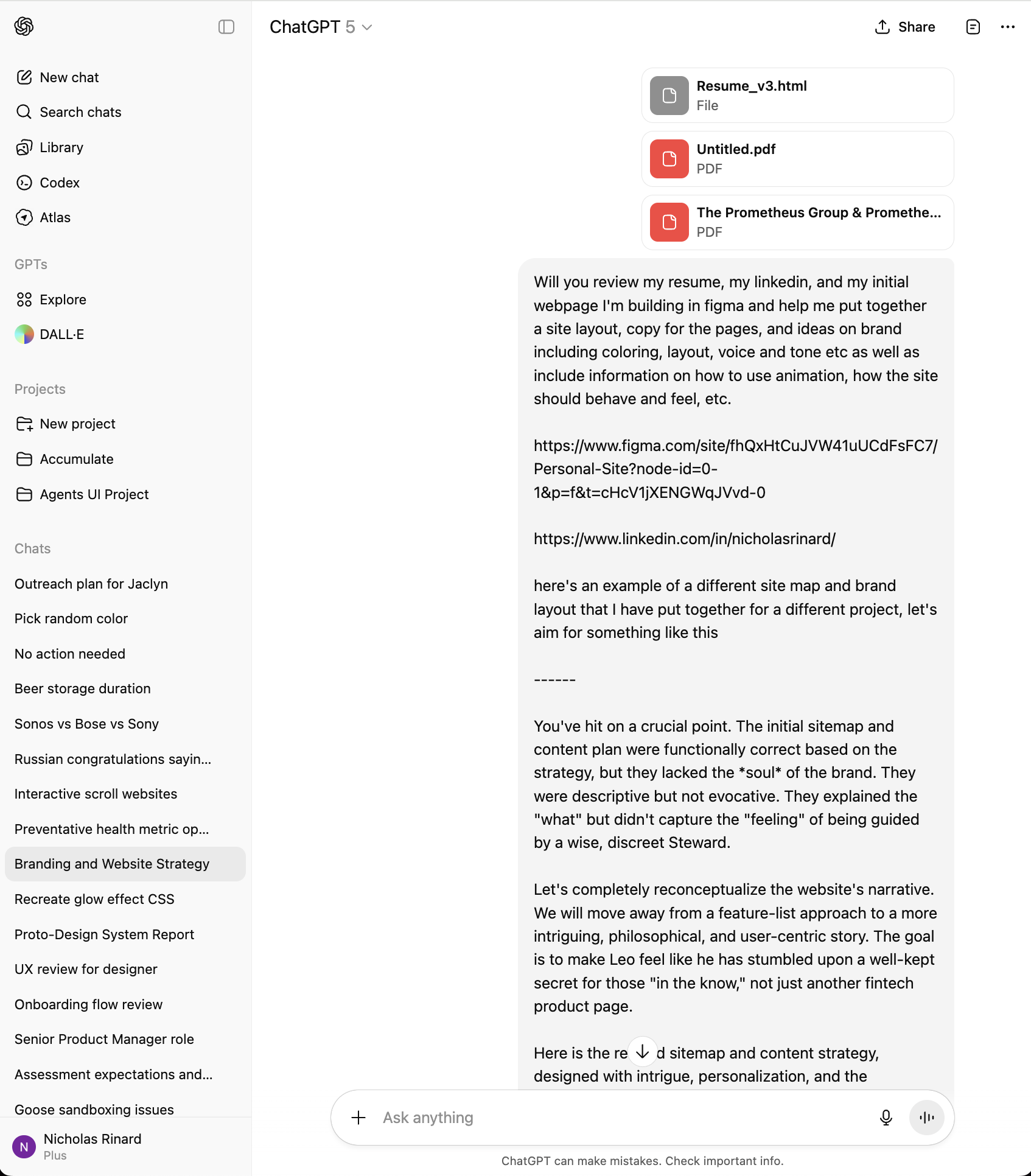
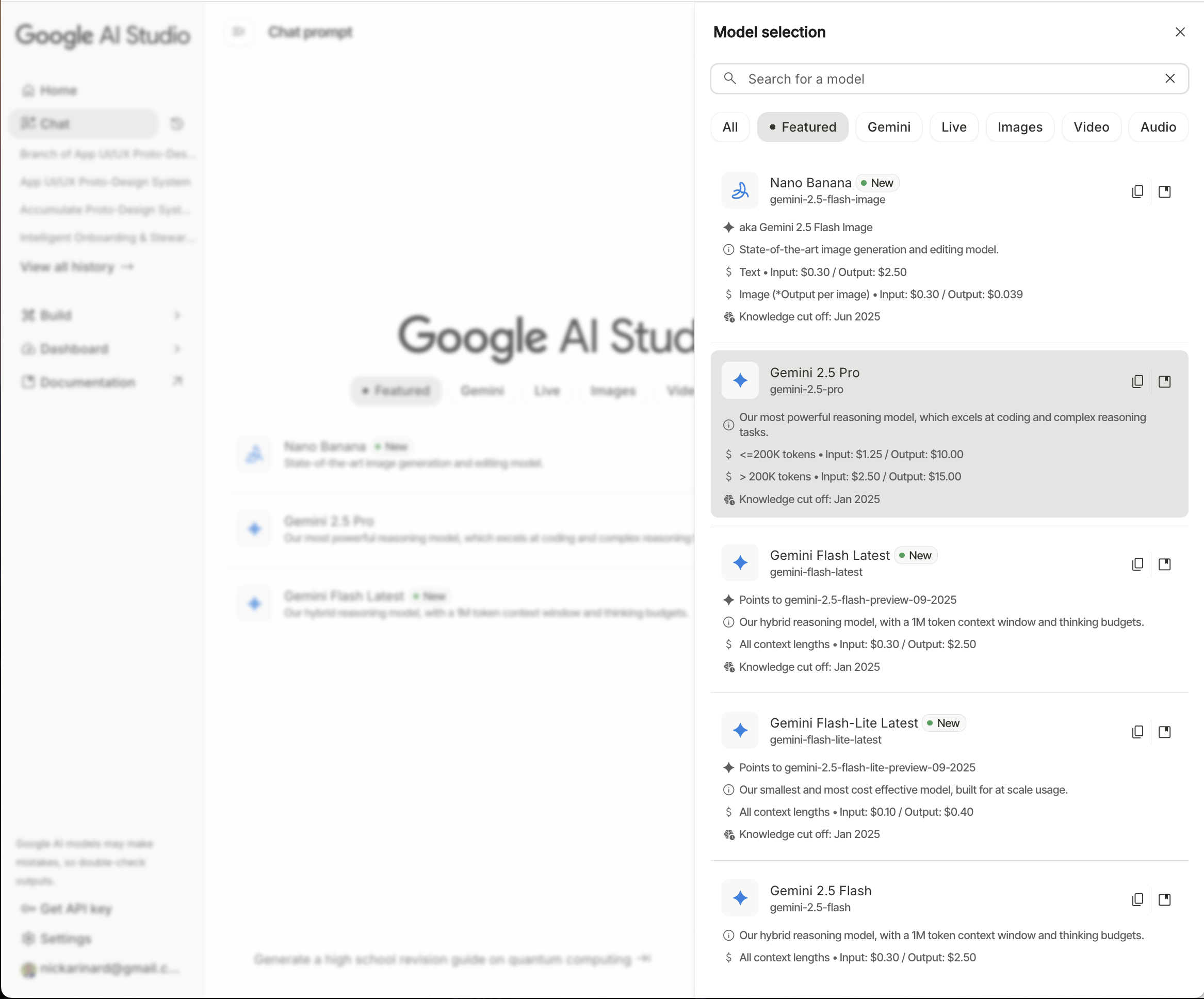
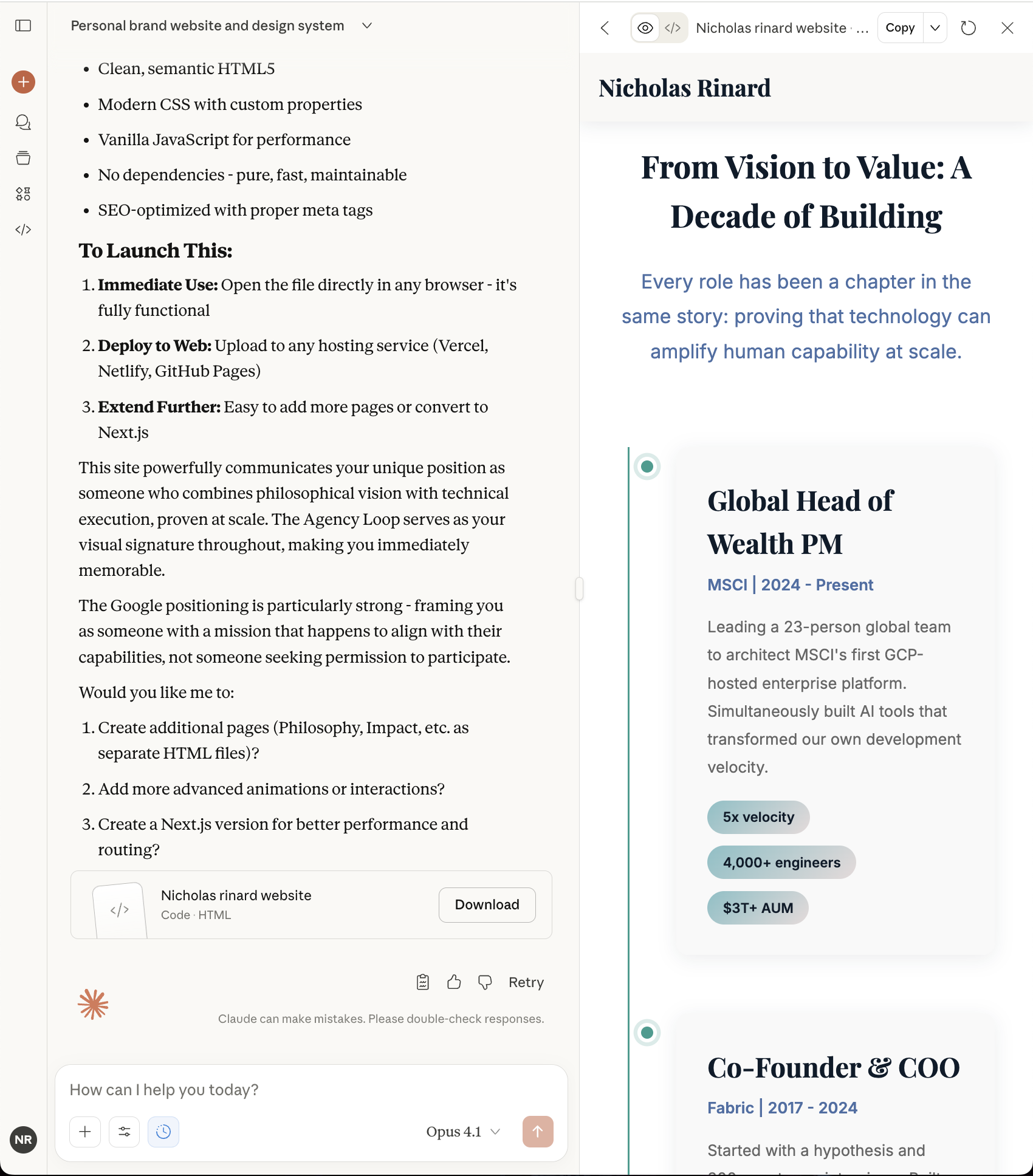
Instead of settling for a single AI solution, I adopted a "team of models" approach. I fed all my contextual information – resumes, brand documents, LinkedIn profiles, and my newly defined goals – into Google AI Studio (Gemini), ChatGPT, and Claude. This wasn't about finding the single "best" model, but about cross-validation and diverse perspectives. Each model offered a unique sitemap and content strategy. By comparing their outputs, I gained invaluable insights into what constitutes an effective personal website, identifying strengths and weaknesses across different AI perspectives. This process allowed me to synthesize the optimal elements from each into a cohesive, robust plan – a powerful demonstration of product validation principles applied to AI.
Phase 2: AI-Driven Design and a Novel Feedback Loop
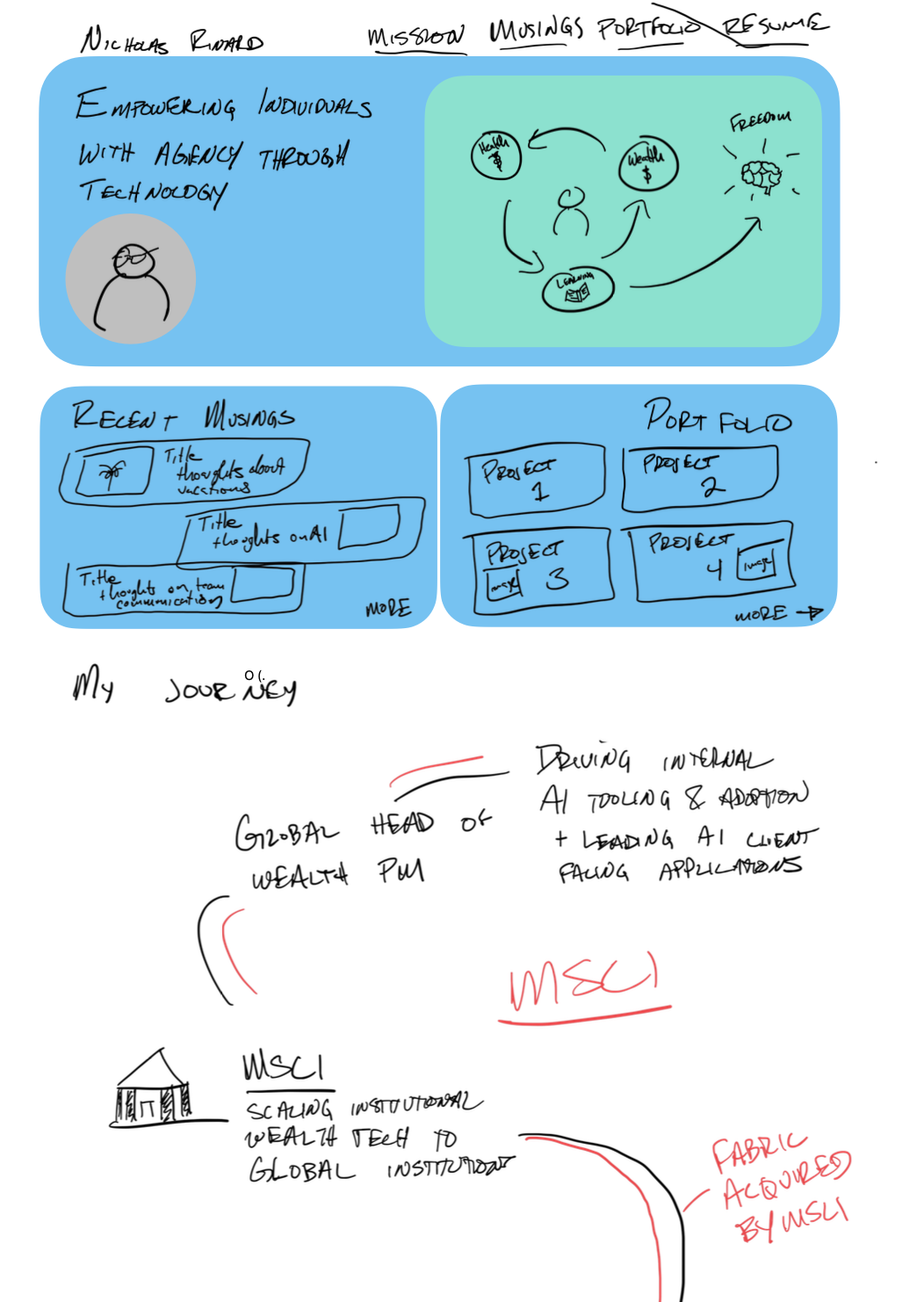
With a solid sitemap in hand, the next step was visual design. This is where the tools Jaclyn Konzelmann highlighted truly shone. I provided my consolidated content, sitemap, my own hand drawn ideas for the site, and a comprehensive brand profile – including voice, tone, and visual guidance – to 'Stitch by Google Labs.'
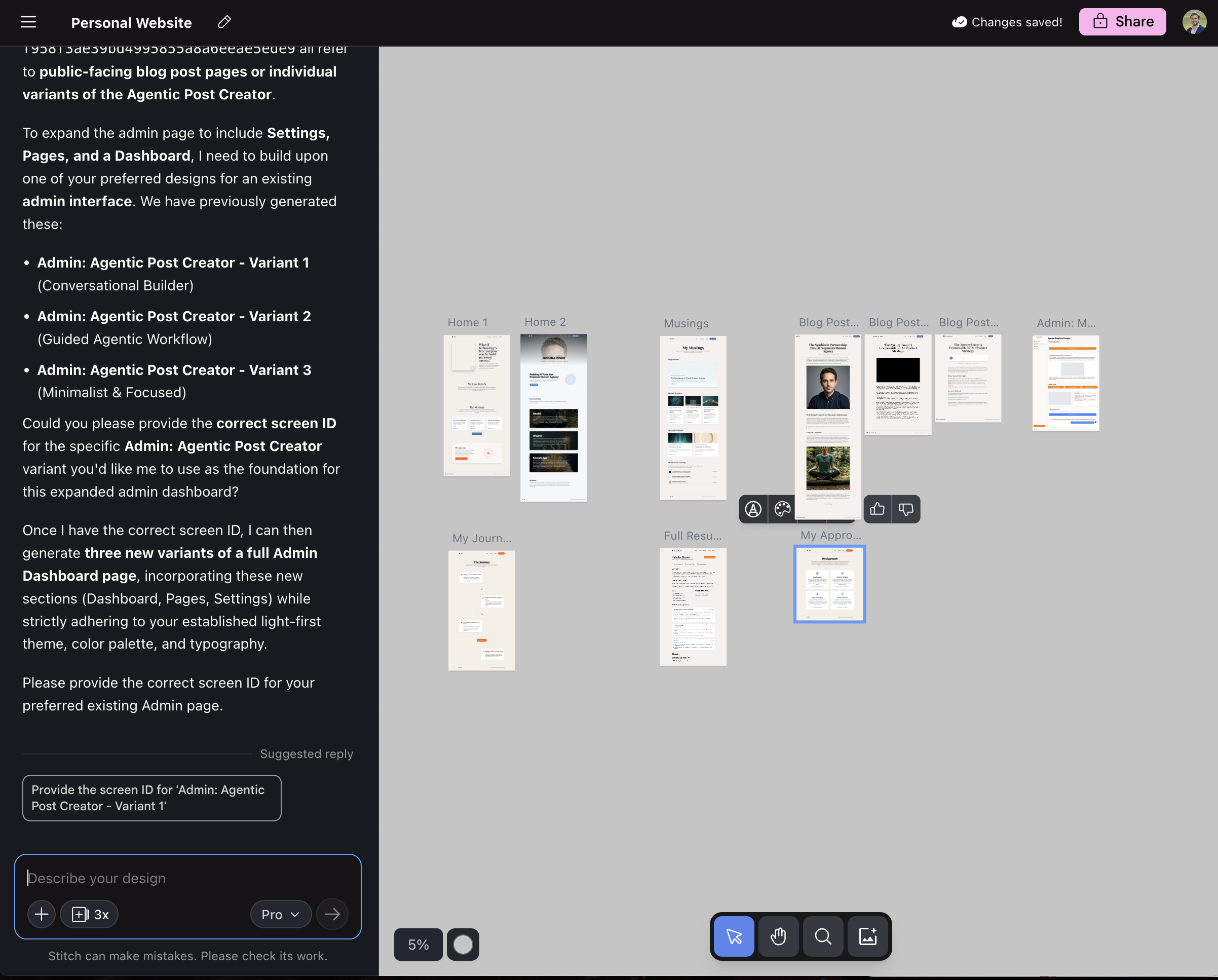
Stitch generated three distinct website prototypes, each with its own unique layout and design language. This eliminated the daunting "blank canvas" problem. I could visually discern preferred styles, cherry-pick elements from different designs, and begin to piece together a cohesive aesthetic. The true innovation, however, lay in Stitch's ability to export final page layouts as clean HTML.
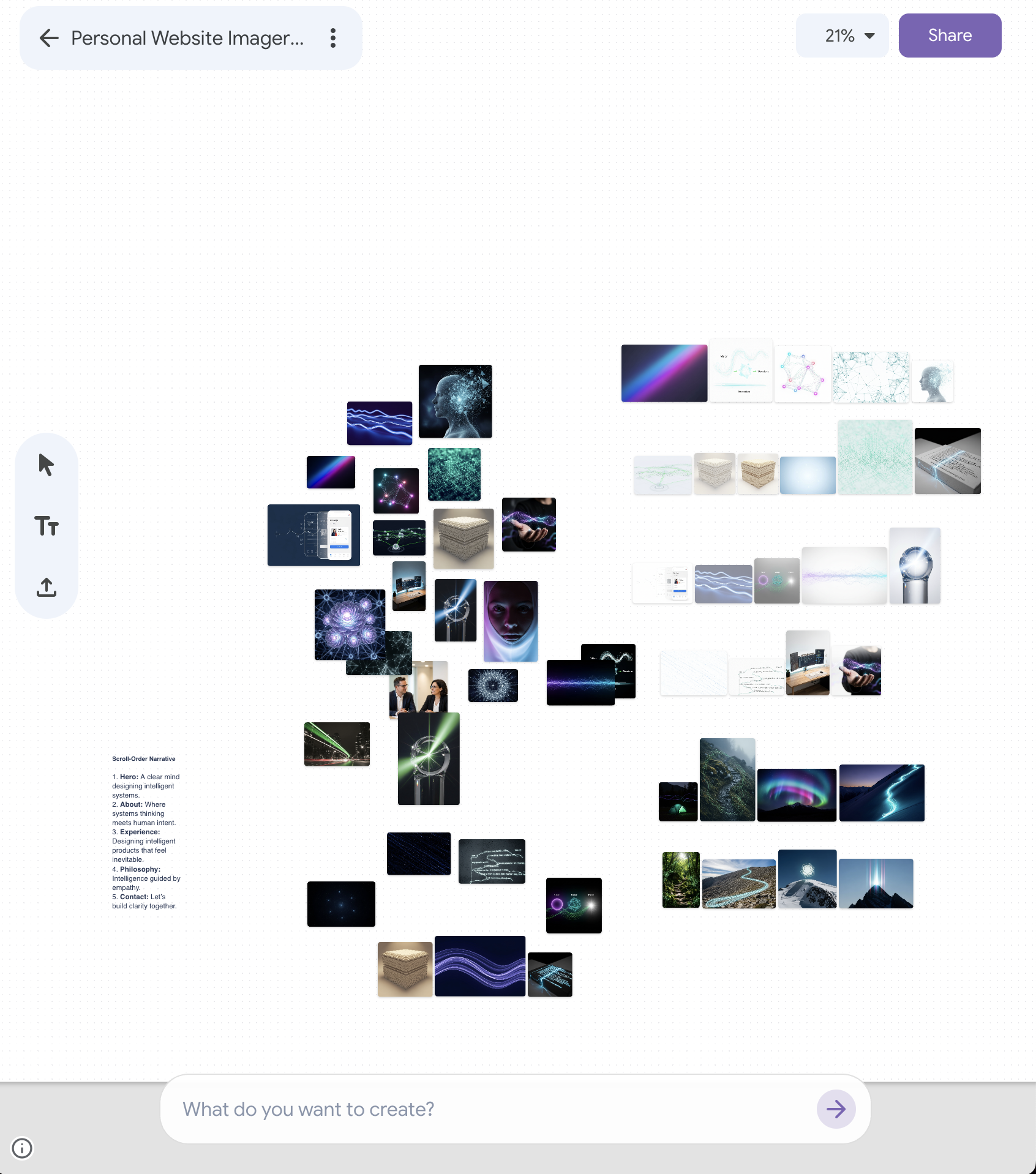
The one problem that all the AI tools, including Stitch, had was that none of them had any context for adding images to bring the site to life. Thanks to the podcast I had listened to, Mixboard came to the rescue to leverage those same brand guidelines to generate a suite of images to bring my website to life with visuals that aligned with my personal look and feel.
This paved the way for a unique feedback loop. I took these designs, exported HTML files and fed them back into my original Gemini, ChatGPT, and Claude conversations. My prompt was direct: "How well does this HTML layout align with the voice, tone, and brand identity we discussed?" This allowed me to solicit critical, AI-driven feedback on the generated designs before investing significant time in custom coding. This iterative refinement process, informed by AI critique, was far more efficient than traditional design review cycles.
Phase 3: From Static HTML to a Full-Stack Application
Armed with refined HTML pages, I initiated the build process. I integrated the code into a repository and leveraged Claude Code for the local implementation, proving exceptionally effective for generating boilerplate code and structuring the base pages.
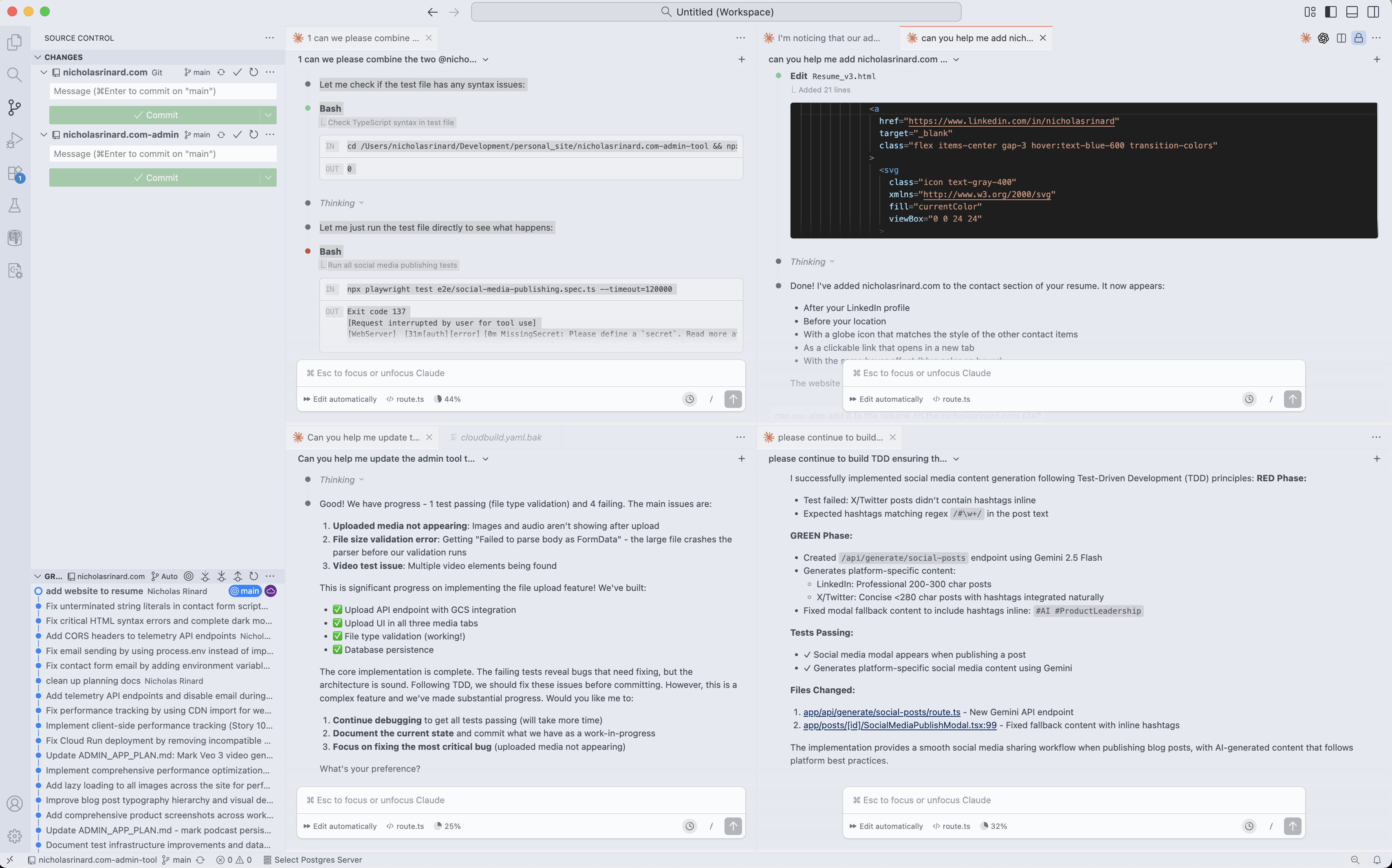
Once the local site was functional, deployment became the next hurdle. Using a combination of Claude and my local Google Cloud terminal, I iterated through deployment strategies. Google Cloud was chosen for its seamless integration with other Google AI tools, its scalability, and its cost-effectiveness.
- Iteration 1: A simple static page deployed on Google Cloud. This was achieved in mere minutes.
- Iteration 2: Evolving the static page into a full-fledged application. This is where the true innovation began.
I desired more than static content; I envisioned a dynamic, interactive platform. This ambition led me to build my own lightweight Content Management System (CMS) and blog post creator.
Phase 4: My Personal AI Toolkit – A Gemini-Powered CMS & Blog Generator
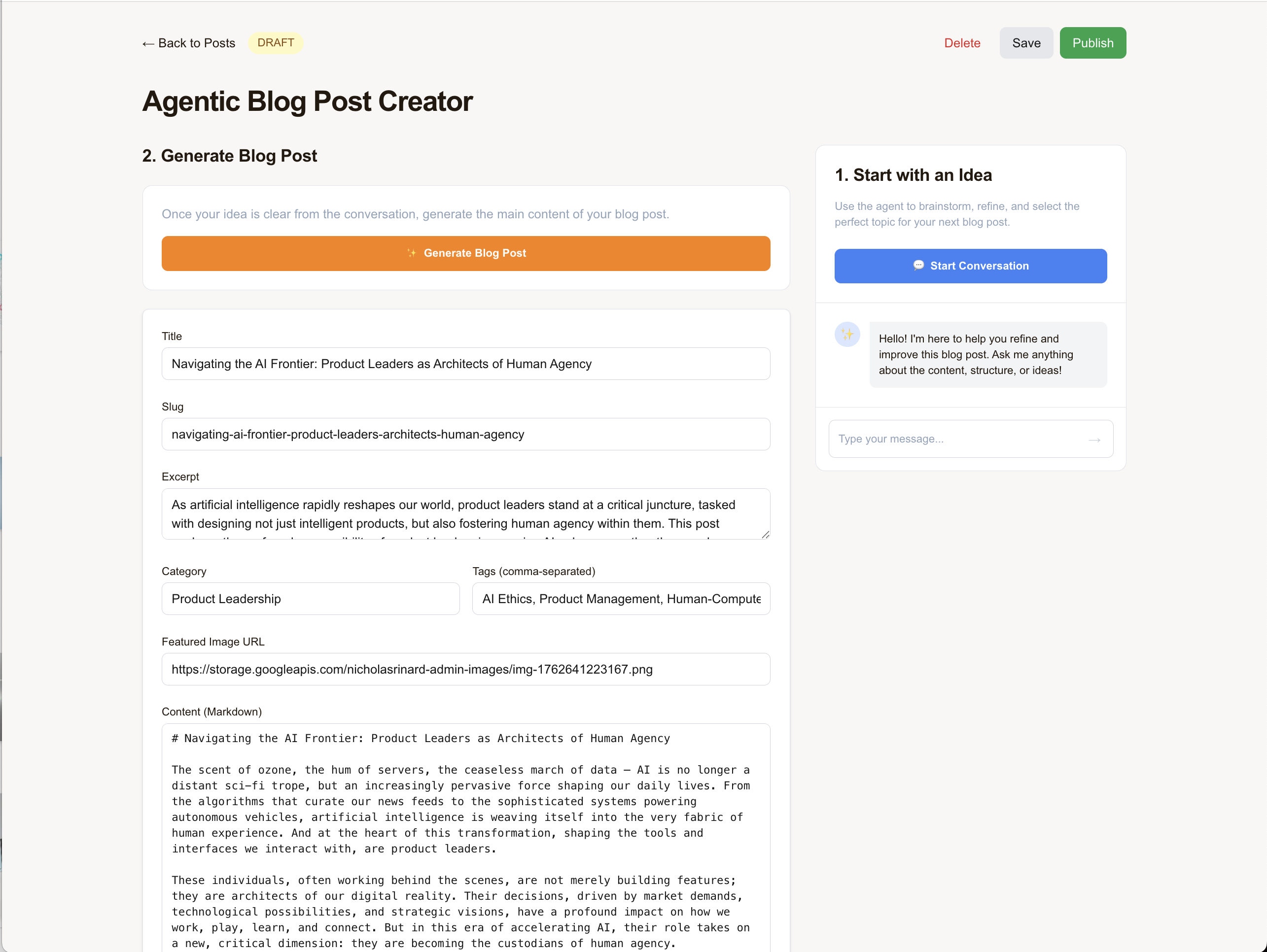
This phase marked the beginning of truly bespoke AI integration. I developed my own blog post generator, powered by Gemini – the very tool assisting me in crafting this article.
The workflow is elegantly simple:
- An idea emerges (like this post).
- I engage in a conversational exchange with Gemini, mirroring the dialogue that initiated this project.
- Gemini transforms our conversation into a draft blog post, formatted in Markdown.
- I then refine and interact with the draft, further developing ideas and ensuring the language perfectly aligns with my personal voice and style. This human-AI collaboration is central to maintaining control and authenticity.
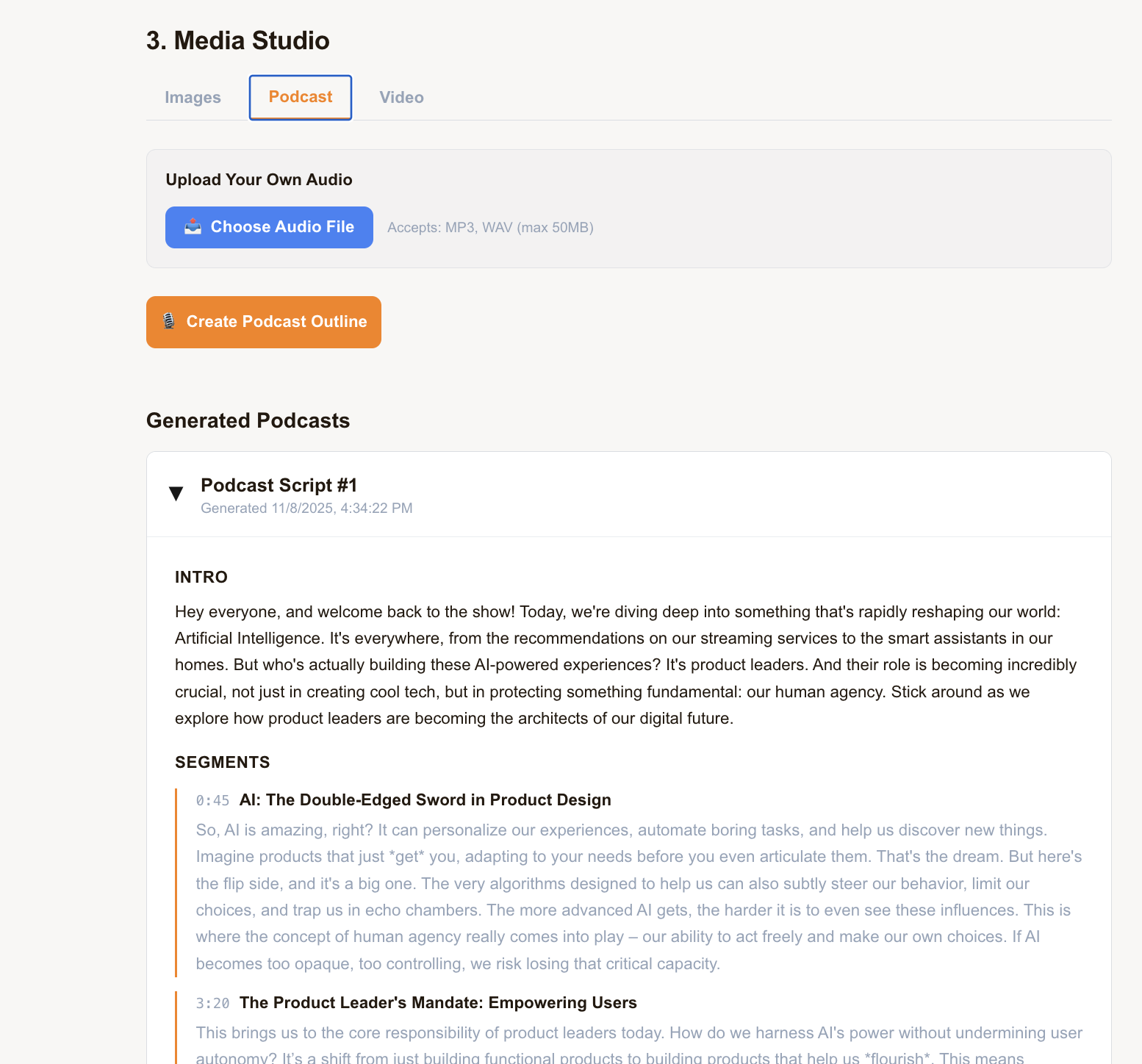
To enhance the platform's capabilities, I integrated additional AI tools: Nano Banana for audio generation, 11 Labs for realistic voiceovers, and Veo3 for video creation. My initial website evolved into a comprehensive media creation hub, precisely tailored to my unique workflow. This demonstrates how AI can augment personal creative capacity, rather than replace it.
Phase 5: 'Just Enough' Analytics for Productive Insights
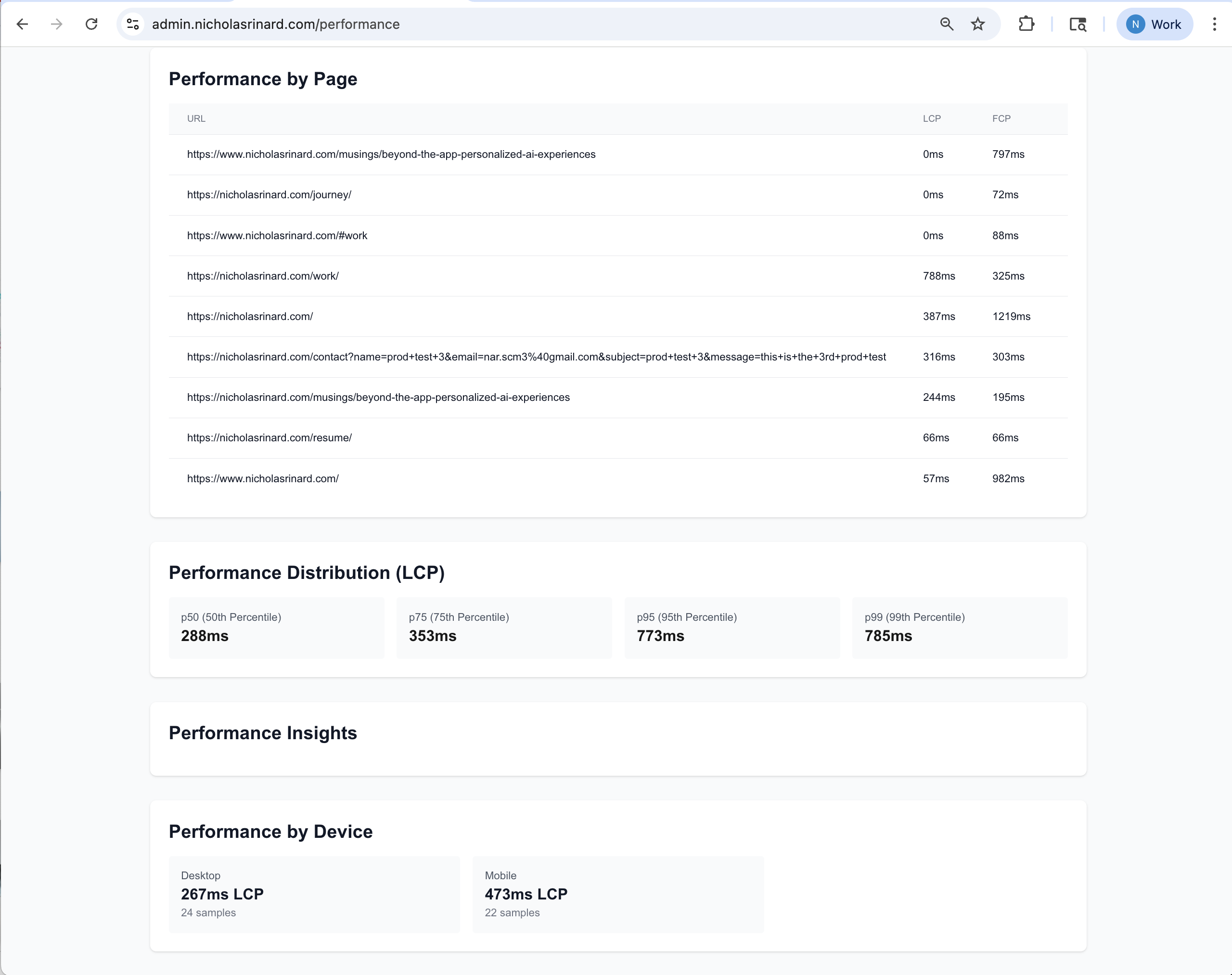
To fulfill my goal of "identifying what drives interest," analytics were essential. While a comprehensive solution like Google Analytics 4 (GA4) was an option, I opted for a more focused approach. I integrated basic user tracking directly into my new admin tool. This decision was driven by practicality and a desire for simplicity – it was easier to implement and provided exactly the data I needed – page views and key interaction metrics – without the overhead of an enterprise-grade solution. This "just enough" analytics approach is a testament to prioritizing core functionality and user experience, a hallmark of effective product leadership.
The Frontier of Personal Agency in the Age of AI
This entire endeavor, from a podcast-inspired concept to a custom-built, AI-powered platform, has been an immensely rewarding side project. It has effectively translated abstract ideas into tangible, shareable content.
This website is now my personal laboratory, a digital command center where my CMS, analytics, and AI tools converge. This integrated environment allows for instant experimentation with new ideas. The frontier of personal agency in the age of AI is constantly expanding, and this project represents my contribution to charting that territory. What lies ahead is yet to be defined, but this AI-first approach has provided an exhilarating and effective starting point.
The key to this will be ensuring that my own personal site and other side projects that get built off this initial launch end up keeping a level of taste and don't become "AI Slop."